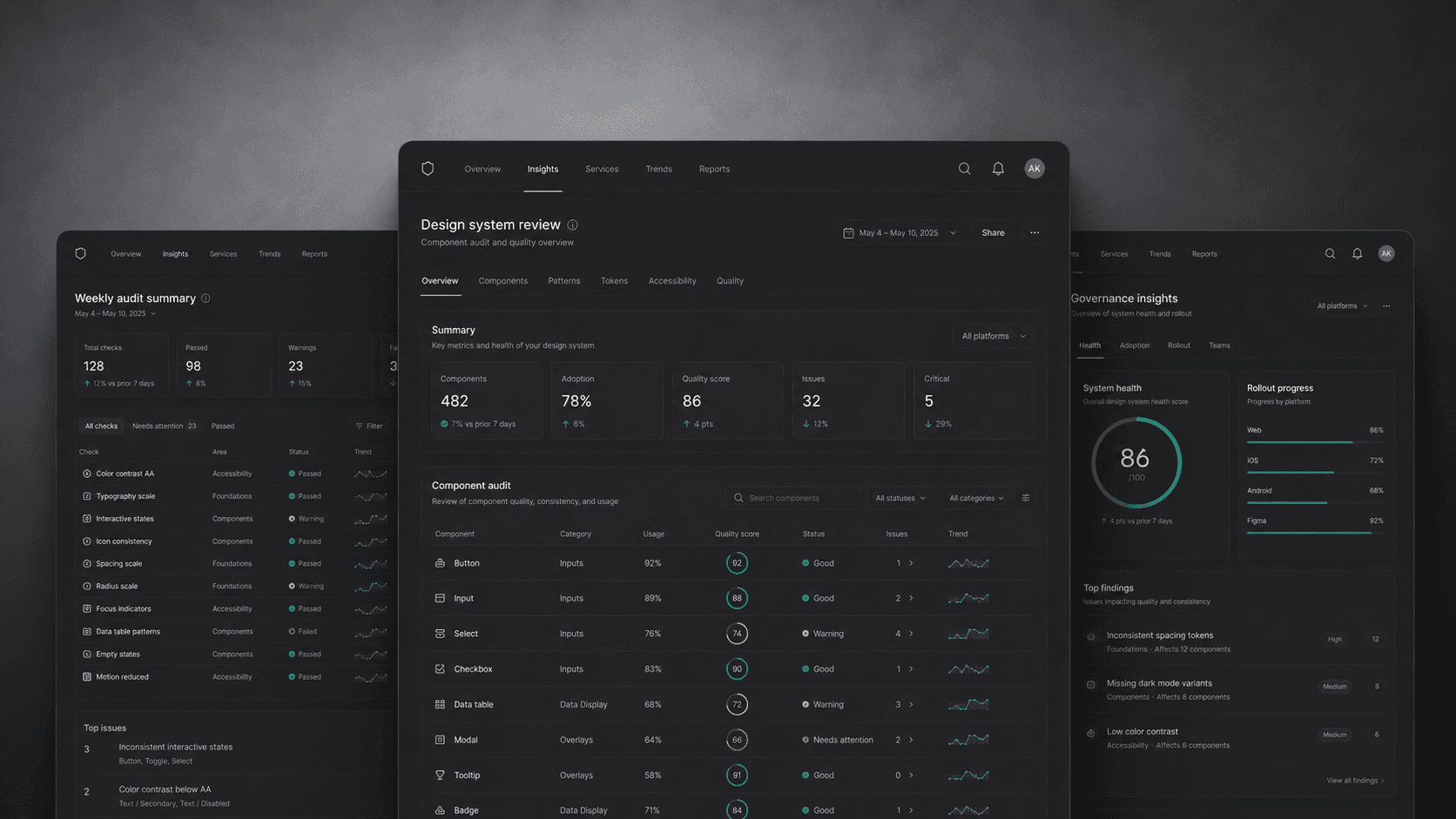
Design System Audit
Audited a fragmented product interface to expose drift across patterns, states, accessibility, and implementation logic.
The product interface had accumulated drift across components, states, accessibility patterns, and implementation details. What looked like scattered visual inconsistency was really a systems problem: teams were making local decisions without a shared map of what was stable, what was outdated, and what needed to change.
The audit turned that ambiguity into a prioritized review of risk, reuse, and adoption. It helped the team see which issues were cosmetic, which were structural, and which needed governance before they became harder to unwind.

The key shift was moving the review away from visual preference and toward operating logic. Instead of asking whether screens looked consistent, the audit asked which patterns were reliable, which tokens had lost meaning, where component behavior diverged from design intent, and what teams needed in order to adopt better standards without slowing delivery.
This made the work easier for designers and engineers to evaluate together. The system was no longer treated as a style layer; it became a shared decision layer for quality, accessibility, reuse, and implementation consistency.

Supporting proof included component comparisons, state audits, token notes, accessibility findings, governance gaps, and annotated examples of implementation drift. Each artifact connected a visible inconsistency back to a deeper system issue.
The strongest evidence came from repeated mismatch across related surfaces. When similar patterns behaved differently, the review could show exactly where ambiguity had entered the product and what would be required to remove it.

The outcome was a clearer system review with visible priorities, stronger standards, and a more practical path toward adoption. The audit gave teams a shared language for discussing drift, reduced subjective debate, and turned hidden inconsistency into decisions that could be sequenced and owned.
The reflection was that design-system work is strongest when it protects future delivery. A good audit does not simply list inconsistencies; it shows which decisions need to become durable so teams can move faster without losing coherence.